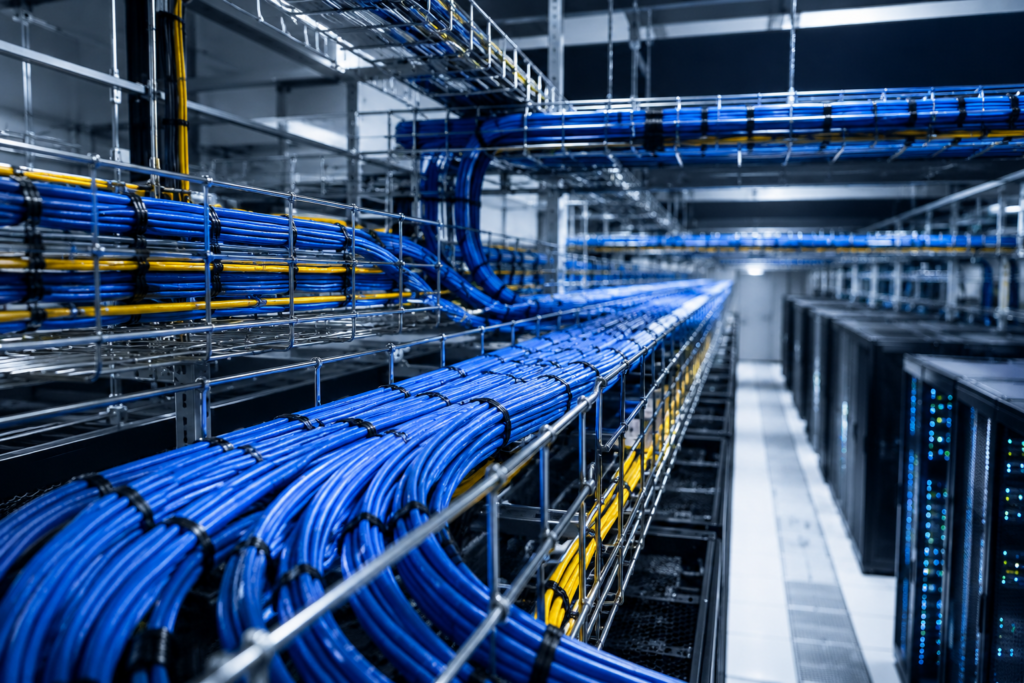
Data centre contractors know the obvious part: cables need to get from A to B. The less obvious part is what happens after handover. Moves, adds, changes, expansions, replacements, audits, and upgrades will keep happening. If pathways aren’t designed for maintainability from day one, cable work becomes slower, riskier, and more expensive every year the facility operates.
In a high-uptime environment, cable management is not just “tidy.” It affects airflow, serviceability, safety, fault isolation time, and how confidently a site can scale. It also affects how cleanly you can pass inspections and how smoothly your team can execute phased rollouts without disrupting existing routes.
IEP Sdn Bhd supports these outcomes with installation solutions such as cable trays, cable management systems, cable ties, cable cleats, and complementary protection scope like passive fire stop and water penetration seals. Founded in March 2007, IEP provides products and systems purpose-designed to perform reliably in hazardous and harsh environments, built around proven technologies and engineering expertise for customised project requirements.
A common mistake in data centre builds is designing only for Day 1. A better approach is to design for Day 1 plus the next three cycles of growth.
When you plan around future change, your containment system becomes a tool for speed and safety, not just a structure for cables.
Different spaces need different containment. The best builds usually use a mix.
IEP supplies a complete cable management portfolio ranging from wire mesh cable tray/basket to cable ladder systems made of high-quality material/finishing with resistance ability to withstand in hazardous environments, supported by design and consultancy services and installation services.
Containment gives you a route. Cable control keeps the route stable and serviceable.
In high-density environments, cable movement and poor fixing can become a hidden long-term risk. Cleats and clamps improve stability, reduce strain, and help keep routes consistent. This is especially important at transitions, drops, risers, and areas with vibration or frequent maintenance access.
Cable ties are small, but they decide whether a route stays clean or becomes a tangled mess. The right tie material and application method matters. IEP offers industrial cable ties including stainless steel cable ties and Ty-Rap nylon cable ties, supporting bundling and securing for long-term organisation.
For contractors, identification is also a big deal. When you can trace quickly, you reduce change time and avoid mistakes that create downtime risk.
A pathway that looks good at handover can still be painful to work on later. Maintainability means your team can safely access, add, remove, and inspect without dismantling half the route.
IEP’s cable management system approach is especially useful in facilitating ease of wiring changes, allowing replacements and installations to be carried out with minimal interruptions to other wiring.
For data centres, cable pathways don’t stop at the tray. They cross walls, floors, and compartments.
Where cables penetrate fire-rated barriers, passive firestop protects compartment integrity. IEP provides integrated firestop solutions required in mechanical, electrical and plumbing (MEP) segments specifically in penetration sealing and construction joints (expansion joint), including firestop system consultancy, product selection, installation services and inspection services.
Water ingress is a real risk in mission-critical facilities, especially where external duct entries, basements, or service corridors exist. IEP provides expertise in mechanical sealing systems to protect buildings from water penetration or leaks with absolute reliable tightness, supporting cable seals, pipe seals and building seals.
When containment is designed together with firestop and sealing, you reduce rework and avoid last-minute site improvisation.
Good materials don’t save a project if execution is rushed. Installation quality affects alignment, support spacing, interface finishing, and long-term safety.
IEP provides electrical installation works through experienced, trained and certified personnel for wire mesh cable tray or perforated tray and ladder system, alongside related systems such as firestop and water sealing scope. For contractors, this support can make the difference between “installed” and “site-ready.”
Data centre builds often run in phases. Standardising systems and brands reduces variation and speeds up approvals. IEP supports procurement outsourcing with sourcing, evaluation & analysing fulfilment to standard specification, and procurement & supply chain management, useful when multiple stakeholders and strict timelines are involved.
A data centre cable management system should be easy to live with, not just easy to install. When the pathways are designed for change, protected at penetrations, and executed with discipline, contractors deliver a facility that scales cleanly and stays serviceable under pressure.
If you’re planning a new build or a staged expansion, IEP can support your cable management scope, from product selection to design consultation, installation services, and complementary protection systems. Talk to IEP about your layout, density, and compliance needs, and we’ll help you shortlist the right approach.